Welcome to HITOP FORKLIFT
EN

Language

Language
Save
icon Inquiry cart ( 0 )
News & Events

Forklift Camera & Laser Level Monitoring Systems: Boost Safety and Precision in Warehousing

Views : 1189
Update time : 2025-05-23 12:03:05
Introduction
Forklifts are indispensable in warehouses and logistics hubs, but operator blind spots and uneven load handling remain critical risks. Modern forklift camera systems paired with laser level monitoring technology provide real-time visibility and precision alignment, drastically reducing accidents and operational errors. This guide explores how these systems work and why they’re essential for compliant, efficient material handling.  


1. What Are Forklift Camera & Laser Level Monitoring Systems?
-Forklift Camera Systems:  
  Multi-angle HD cameras (front, rear, or 360°) with night vision and anti-glare features, streaming live footage to an in-cab monitor.  
- Laser Level Monitoring:  
  Projects laser lines or grids to ensure pallets/loads are leveled correctly before lifting or stacking.  
  Synergy: Combined, they eliminate blind spots and provide millimeter-level alignment accuracy.  
 
2. Key Benefits of Integrating Both Systems    
A. Enhanced Safety
- Eliminate blind spots causing 30% of forklift accidents (OSHA data).  
- Laser-guided positioning prevents unstable loads from tipping.  

B. Operational Efficiency
- Reduce time spent manually aligning forks by 50%.  
- Real-time camera feeds enable faster reversing and narrow-aisle navigation.  

C. Cost Savings 
- Minimize product damage from misaligned loads.  
- Lower insurance premiums through accident reduction.  

3. Technical Specifications to Consider  
- Camera Requirements:  
  - 1080p resolution + IP67 waterproof rating  
  - Wide dynamic range (WDR) for low-light clarity
 
- Laser System Features:  
  - Adjustable laser angles (0°-90°)  
  - Battery life: 8-12 hours continuous use  
- Compliance: Meets ANSI/ITSDF B56.1 safety standards.  

4. Top Applications Across Industries
- Cold Storage Warehouses: Cameras resist condensation; lasers ensure stable pallet stacking in slippery conditions.  
- Manufacturing Plants: Monitor tight assembly lines with 360° camera coverage.  
- Port Logistics: Laser systems secure containers on uneven surfaces.  

FAQ Section
Q: Can these systems retrofit older forklifts?
A: Yes! Most kits are compatible with all major forklift brands.  
Q: How long does installation take?
A: 2-4 hours per vehicle by certified technicians.  
Q: What’s the ROI time frame?
A: 6-12 months via reduced damage claims and productivity gains.  

Conclusion  
Investing in forklift camera and laser level monitoring systems isn’t just about compliance—it’s a strategic move to future-proof your operations. 

Combining camera visibility with laser precision isn’t just theoretical—watch our demo video above to see how these systems prevent accidents in high-stakes environments. 
Related News
Read More >>
What to Check When Your New Forklift Arrives What to Check When Your New Forklift Arrives
Sep .18.2026
A new forklift should be inspected before it enters daily service. A structured handover check gives the receiving team a chance to confirm that the truck arrived in the expected condition, that its basic functions work properly, and that the required documents are available.
250-Hour Forklift Maintenance: What to Check After the Second Service Interval 250-Hour Forklift Maintenance: What to Check After the Second Service Interval
Aug .24.2026
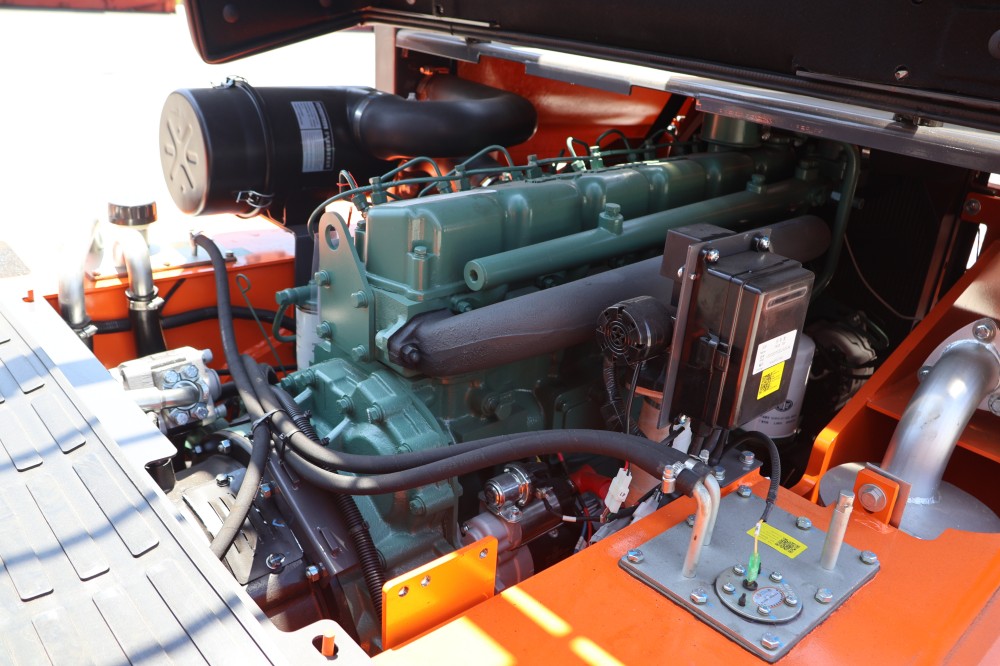
A proper 250-hour service is not just an oil change. It is a structured inspection of the forklift's operating condition, lubrication points, mast and chain system, transmission components, brake system, tire condition, and key fasteners. For electric forklifts, it is also the right time to inspect and clean the battery, electrolyte, connectors, and electrical controls.
First 50-Hour Forklift Maintenance: What Should Be Checked After Initial Use First 50-Hour Forklift Maintenance: What Should Be Checked After Initial Use
Aug .20.2026
Learn why the first 50-hour forklift maintenance is important and what should be checked, adjusted, lubricated, or replaced after the initial running-in period.