
The 500-hour service is an important point in a forklift's planned maintenance schedule. At this stage, the truck has completed its daily checks, the first 50-hour running-in service, and the 250-hour follow-up inspection. It is now time for a more deliberate review of the systems that support regular operation: transmission, engine, fuel, air intake, drive axles, brakes, steering, mast, and key structural fasteners.
This is not a service interval to treat as a quick visual check. The 500-hour inspection combines routine operating checks with fluid and filter work, lubrication, cleaning, component adjustment, and closer attention to wear-prone parts. Done on schedule, it helps keep the forklift predictable in daily work and gives technicians a better chance to find small issues before they lead to downtime.
Forklifts accumulate vibration, heat cycles, dust, and load-related stress during normal work. By 500 hours, oils and filters may need service, fasteners may require another inspection, and the brake, mast, steering, and drive systems deserve a more thorough review.
The main purpose of this service interval is to:
Maintain stable travel, lifting, steering, and braking performanceThe exact tasks and replacement intervals can vary by forklift model, power type, attachment configuration, and working environment. The machine's service manual should always be the final reference.
Begin with the parts the operator uses every shift. Check whether the power switch, dashboard instruments, pedals, control levers, and buttons work smoothly and respond as expected.
The service check should include:
Switches, warning indicators, and dashboard instrumentsThis first step helps connect the operator's day-to-day feedback with the technical inspection. A slower response, a heavy pedal, or a new noise may point to a developing issue elsewhere in the truck.
The forklift should steer and stop consistently, while lift and tilt functions should move in a controlled manner. At 500 hours, inspect the steering system and steering axle stops, as well as brake performance and tilt cylinder synchronization.
Check for:
Normal steering movement and steering axle limit functionLeaks should be corrected promptly. A small hydraulic or oil leak can become a larger reliability and housekeeping problem, while a brake or steering concern should be addressed before the forklift returns to regular duty.
The 500-hour service should include a full lubrication check. Inspect the grease points and pins to confirm that lubricant can reach the required contact surfaces.
Give attention to:
Steering linkage and pivot pointsAdequate lubrication reduces friction, noise, and accelerated wear. It also helps keep lifting and steering movements smooth under load.
The mast system is central to safe load handling. During the 500-hour service, inspect the clearance of mast rollers and check whether lift chain tension is normal. Inspect the fork carriage, forks, and load backrest for visible damage or abnormal movement.
Also inspect the axle and wheel areas, including bridge and wheel hub fasteners. Check whether bolts remain secure and whether there are signs of movement, wear, or damage.
Main points include:
Mast roller condition and clearanceA forklift that regularly carries heavy loads, travels over rough surfaces, or works with attachments may need closer attention in these areas.
Normal forklift operation creates vibration across the frame, powertrain, and mast. The 500-hour service includes checking the fastening condition of the transmission, engine brackets, and other important bolts and nuts.
Inspect fasteners around:
Transmission and transmission mounting pointsThe goal is not simply to confirm that a bolt is present. Look for looseness, damaged threads, movement marks, and mounting points that may be under unusual stress.
Transmission condition has a direct effect on travel performance. The 500-hour service table calls for replacing transmission oil and servicing the filter components of hydraulic transmissions where fitted.
Depending on the truck configuration, this may include:
Replace transmission oilUse the correct oil grade and filter specification for the forklift model. Incorrect fluid or delayed service can affect shift quality, heat control, and transmission life.
For diesel forklifts, 500 hours is a key engine maintenance interval. The service work includes engine oil, engine oil filter, fuel filter components, and air intake inspection.
Typical work includes:
Replace diesel engine oil and the engine oil filter elementClean oil protects engine moving parts. A clean fuel system supports stable combustion, while a clean air filter helps the engine breathe properly in dusty warehouse, yard, or production environments.
The service table also calls for inspection of the front and rear drive axles and replacement of gear oil. This is important because the drive axles carry the truck's travel loads and may be exposed to heat, shock, and contamination during operation.
Check for:
Oil leakage around axle housings and seals
Unusual sound during travel
Secure axle fasteners
Gear oil condition and correct oil level
Gear oil replacement as required by the maintenance schedule
If operators report noise while turning, acceleration changes, or vibration from the axle area, give this part of the service extra attention.
The 500-hour interval includes a more detailed brake inspection. In addition to checking basic brake response, clean the brake master cylinder and wheel cylinders, renew brake fluid where required, and inspect brake drum and brake shoe or pad wear.
The inspection should cover:
Brake master cylinder conditionIf braking feels weak, uneven, noisy, or delayed, do not wait for the next interval. The forklift should be inspected before continuing normal operation.
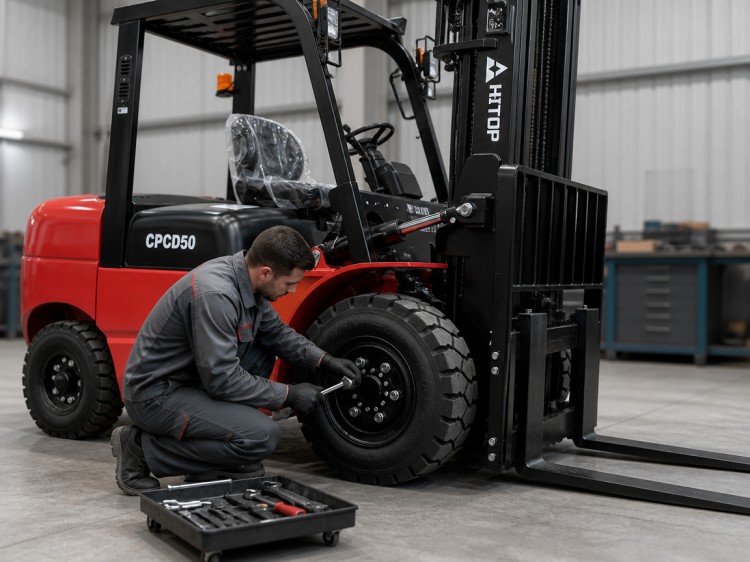
For internal combustion forklifts, remove dirt from the radiator, water tank, and heat dissipation surfaces. Dust and debris reduce airflow and can contribute to overheating.
During cleaning, check:
Radiator surface cleanlinessA clean machine is easier to inspect. It also makes it easier to spot a new leak or damaged component during later daily checks.
For electric forklifts, the 500-hour service should include inspection of the battery pack, electrolyte, and electrical system. Clean dirt and corrosion from the battery, electrical controller, and motor areas.
Key items include:
Battery pack conditionFollow the battery manufacturer's safety procedures. Battery maintenance should be carried out with the correct protective equipment and charging-area practices.
Use this summary as a practical reference for the third scheduled service interval:
Check switches, instruments, pedals, levers, and buttonsThe 500-hour forklift maintenance interval is a practical service point for protecting the systems that do the daily work: transmission, engine, fuel, air intake, drive axles, brakes, mast, steering, and electrical equipment.
Completing the work on time helps maintain safe handling, smoother operation, and a cleaner maintenance record. It also prepares the forklift for the next planned inspection, including the 1000-hour service interval.
 وكيلنا المحلي السيد عادل يقدم الدعم الفني الميداني للرافعات الشوكية في المملكة العربية السعودية
 Our Local Agent Mr. Adel Delivers On-site Technical Support for Forklifts in Saudi Arabia
 What to Check When Your New Forklift Arrives
 250-Hour Forklift Maintenance: What to Check After the Second Service Interval


