
The first 50 hours of forklift operation are an important running-in period. During this stage, moving parts begin to settle, bolts and fasteners may loosen slightly, oil can collect early wear particles, and chains, brakes, steering parts, and hydraulic components start working under real load conditions.
That is why the first 50-hour maintenance should not be skipped. It is not only a routine oil change. It is a complete early inspection that helps confirm whether the forklift is operating normally after initial use.
This guide explains the main items usually checked during the first 50-hour forklift service. It is written as a practical reference for forklift owners, fleet managers, and operators.
Always follow the maintenance manual for your specific forklift model. The items below are a general reference for common diesel, internal combustion, and electric forklifts.
The first 50-hour maintenance is mainly used to check:
Whether the operator has used the forklift correctly during the running-in periodBefore starting the technical inspection, it is useful to understand how the forklift has been used during its first 50 hours. The service team may ask about the working environment, load condition, operating habits, and whether any abnormal noise, vibration, smoke, braking issue, or lifting problem has appeared.
This step helps connect the inspection work with the forklift's actual use. For example, a machine working on rough ground or under frequent heavy loads may need closer attention to tires, mast parts, bolts, and hydraulic components.
The first 50-hour service should include a full check of basic operating controls. Switches, dashboard instruments, pedals, control levers, and buttons should work smoothly and respond correctly.
The technician should check whether:
Dashboard indicators and warning lights work normallySmall control problems should be corrected early because they directly affect safe driving, lifting, lowering, and reversing.
Steering and braking systems should be checked carefully after the running-in period. The forklift should steer smoothly at different angles, and the steering wheels should rotate normally without abnormal looseness, delay, or noise.
The service brake and parking brake should also be tested in a safe area. The forklift should stop steadily without pulling to one side, excessive pedal travel, abnormal vibration, or unusual sound.
If the machine shows weak braking, heavy steering, unstable turning, or uneven response, it should be adjusted before continued use.
A full walk-around inspection should be completed to look for leakage. Common areas include the engine, radiator, fuel system, hydraulic hoses, cylinders, transmission, drive axle, brake system, and pipe connections.
The inspection should cover:
Engine oil leakageEarly leakage should be handled immediately. It can affect braking, steering, lifting, cooling, lubrication, and overall machine reliability.
After the first 50 hours, lubrication points and fasteners need attention. Moving parts begin to settle during initial use, so lubrication and tightening are important.
Typical service items include checking and lubricating grease points, pin shafts, mast-related moving parts, and other manufacturer-specified lubrication areas. The service team should also check the tightening condition of key bolts, including bolts on the engine or motor mounting area, transmission, drive axle, mast supports, and related brackets.
Loose fasteners may lead to vibration, abnormal noise, uneven wear, or structural problems. Regular tightening at this stage helps prevent bigger issues later.
The mast system works continuously during lifting and lowering, so it is a key part of the first 50-hour inspection.
The technician should check:
Mast roller clearanceThe chains should be evenly tensioned and properly lubricated. The mast should rise and lower smoothly without abnormal sound, jamming, or shaking.
The first 50-hour service often includes replacing certain oils and filters because early running-in may produce fine metal particles or contamination.
Depending on the forklift model, common replacement items may include:
Engine oilFor diesel forklifts, fuel filter and air filter condition should be checked carefully. A clogged filter can affect engine performance, fuel efficiency, and starting reliability.
For electric forklifts, the first 50-hour maintenance should include battery inspection. The battery cells, electrolyte level, electrolyte specific gravity, terminals, and battery surface condition should be checked and cleaned where required.
The service team should remove dirt or corrosion from the battery area and confirm that battery connections are secure. Good battery maintenance helps protect driving performance, charging efficiency, and battery service life.
Tires and wheels should be inspected during the first 50-hour service. Tire pressure should meet the required range, and the wheel bolts should be checked for tightness.
The technician should also check important oil levels, including transmission oil, hydraulic oil, brake fluid where applicable, and other required fluids. If any level is low, the correct oil or fluid should be added according to the manufacturer's specification.
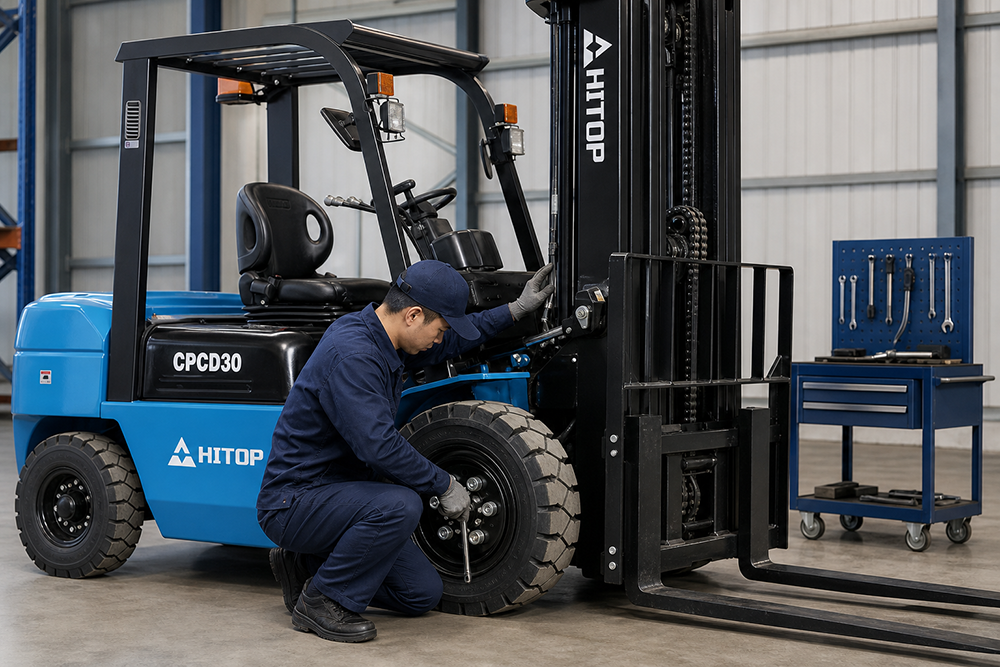
The first 50-hour service is also a good time to remind users about daily maintenance and the next scheduled service.
Operators should continue daily checks before each shift, including fluid levels, leakage, brakes, tires, mast, chains, controls, and warning devices. The next maintenance interval should also be scheduled in advance, especially the 250-hour service, which normally includes deeper inspection and replacement items.
For forklifts operating in dusty, high-load, outdoor, or long-shift conditions, maintenance intervals may need to be adjusted based on actual working conditions.
A practical first 50-hour forklift maintenance checklist may include:
Review product use, operation habits, and running-in conditionThe first 50-hour forklift maintenance is a key step after the initial running-in period. It helps confirm that the forklift is working correctly, removes early contamination from oil systems, corrects looseness, and identifies small issues before they become costly failures.
Daily maintenance keeps the forklift safe before every shift. The first 50-hour service goes one step deeper by checking the systems that have started to settle under real working conditions. Together, they build the foundation for safer operation, longer service life, and more stable forklift performance.
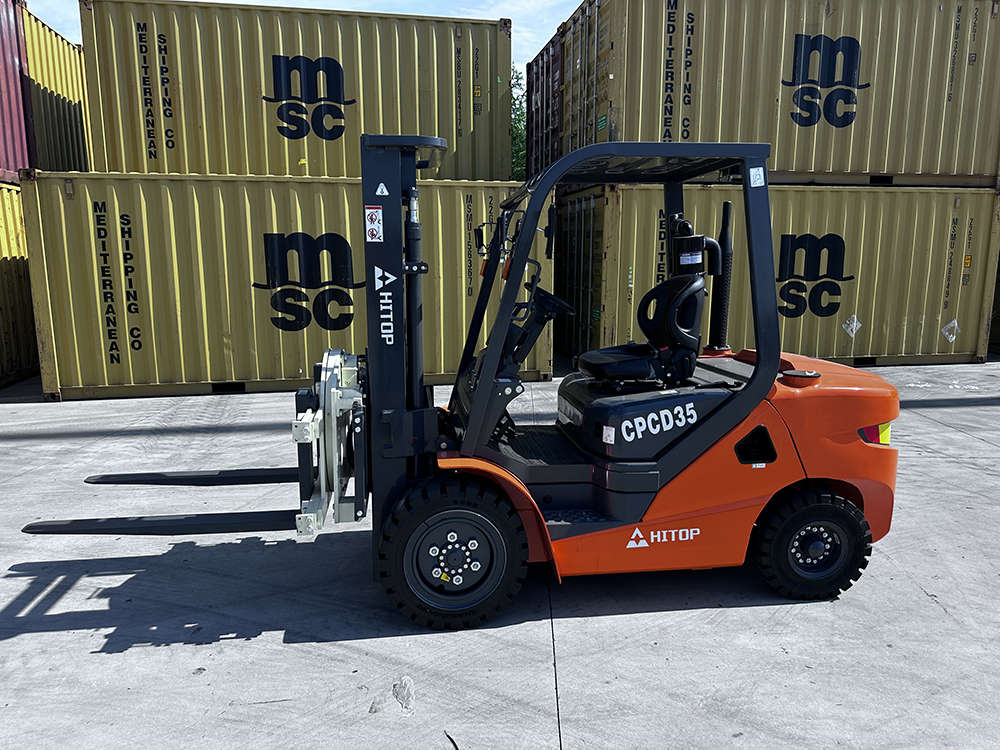 What to Check When Your New Forklift Arrives
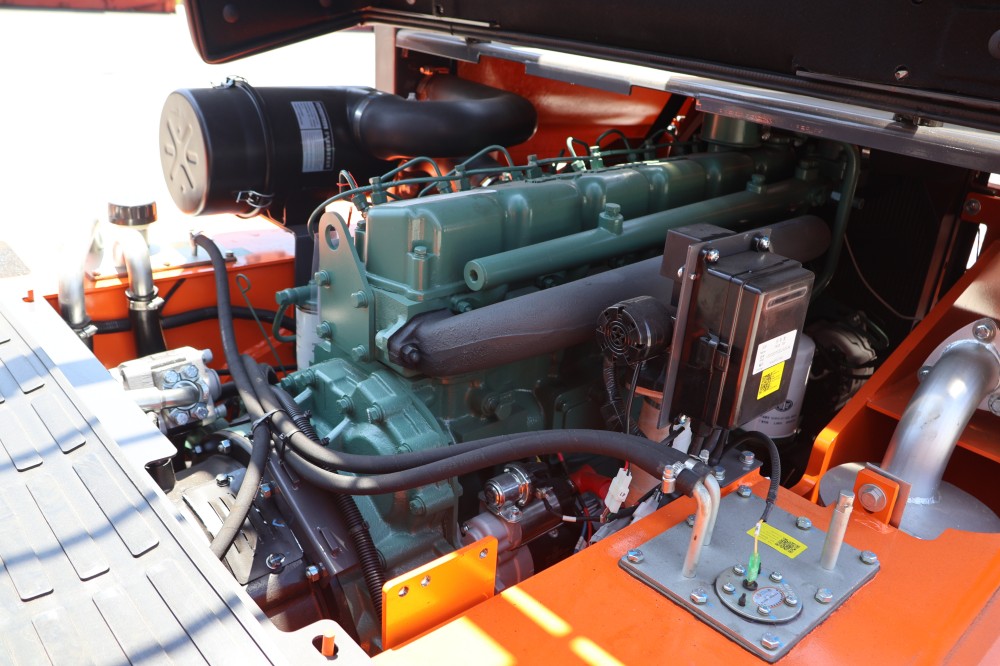 250-Hour Forklift Maintenance: What to Check After the Second Service Interval
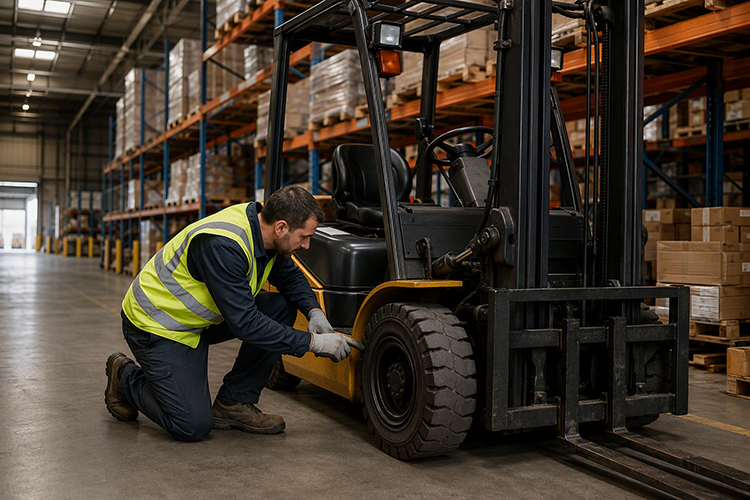 Forklift Daily Maintenance Checklist: What to Inspect Before Every Shift


