
Forklifts work every day in warehouses, factories, yards, and logistics sites. They carry heavy loads, turn frequently, and often operate in tight spaces. Because of this, small problems such as low oil levels, loose chains, tire wear, or hydraulic leakage can quickly affect safety and performance.
Daily maintenance is the first step in keeping a forklift reliable. It helps operators find visible problems before the machine starts work, while scheduled service at 50 hours, 250 hours, 500 hours, and 1000 hours provides deeper inspection and maintenance.
This article focuses mainly on the daily forklift maintenance checklist. The longer service intervals are summarized briefly and can be covered in separate service guides.
Always refer to the official service manual for your forklift model. The checklist below is a general reference for common diesel, internal combustion, and electric forklifts.
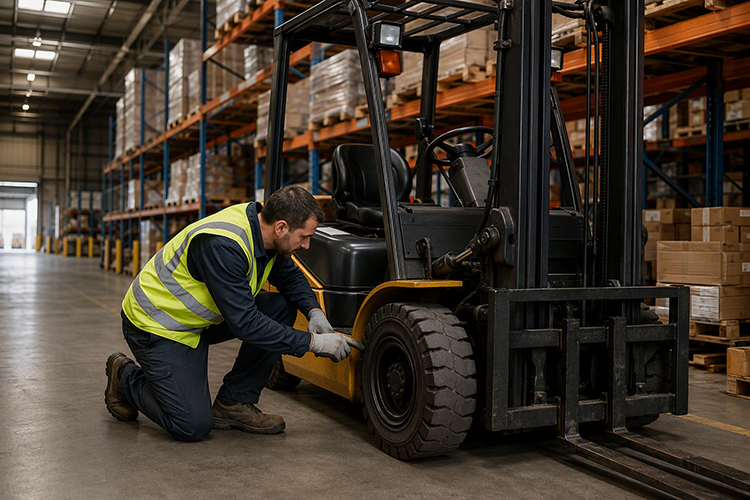
A daily inspection does not take long, but it can prevent many common problems. For operators and fleet managers, it helps improve safety, reduce downtime, and extend the service life of major components such as the mast, hydraulic system, brakes, tires, engine, and transmission.
A good daily routine should answer three basic questions:
If the answer to any of these questions is no, the forklift should be checked before it returns to work.
Check the coolant level, engine oil level, hydraulic oil level, and fuel level. Low fluid levels can cause overheating, poor lubrication, slow lifting, or damage to key components.
For electric forklifts with lead-acid batteries, also check the battery electrolyte level according to the battery maintenance requirements.
Walk around the forklift and check the ground, engine area, hydraulic hoses, cylinders, radiator, transmission, and drive axle area. Any visible leak should be recorded and handled in time.
Small leaks are easy to ignore, but they may lead to low pressure, poor braking or lifting performance, contamination, and higher repair costs later.
Before normal operation, test the brake in a safe area. The forklift should stop smoothly and reliably. Pay attention to weak braking, abnormal noise, vibration, or excessive pedal travel.
If the brake response feels unusual, do not continue using the forklift until it has been inspected.
Watch for:
Abnormal smokeThese signs may point to engine, electrical, hydraulic, or transmission problems.
Check tire pressure, wear, cuts, cracks, deformation, embedded objects, and uneven wear. Tires have a direct effect on stability, braking, and load handling.
Also check whether the wheel bolts are secure. Loose wheel bolts are a serious safety risk, especially when the forklift is carrying loads or turning in narrow aisles.
The mast and fork assembly should be inspected every day because they carry the load directly. Check the mast, fork shaft, fork carriage, load rollers, chains, chain anchors, and load backrest.
Look for obvious looseness, deformation, cracks, abnormal wear, or damaged fasteners. Chain tension should be even, and the mast should move smoothly without unusual noise or shaking.
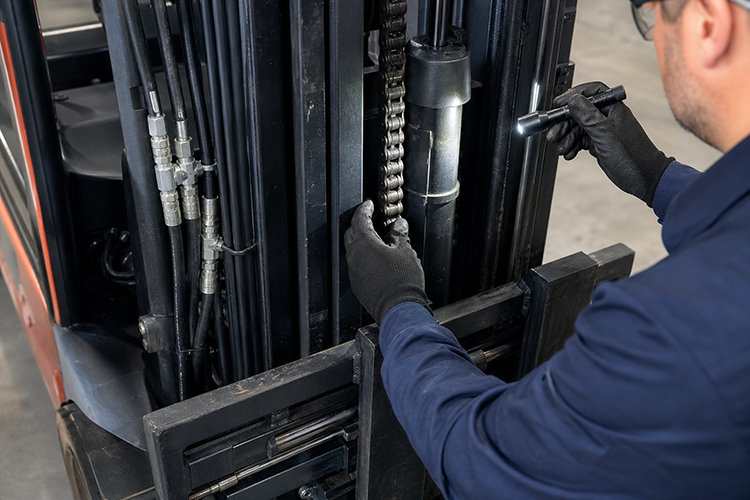
All controls should move smoothly and return correctly. Check the accelerator pedal, brake pedal, direction controls, hydraulic levers, switches, and buttons.
Sticky, loose, delayed, or inconsistent controls can affect safe operation during lifting, lowering, reversing, or braking.
Operate the lift, lower, and tilt functions without load first. The movement should be smooth and stable. Check the hydraulic cylinders, hoses, valves, and fittings for leakage or damage.
Slow lifting, unstable lowering, abnormal sound, or oil leakage usually means the hydraulic system needs attention.
Check whether the overhead guard, load backrest, and related protective structures are firmly installed and not damaged. These parts help protect the operator and support safer load handling.
Loose or damaged safety structures should be repaired before the forklift is used again.
Add grease or lubricating oil to the specified points according to the maintenance schedule. Common lubrication areas may include mast moving parts, transmission shaft points, water pump-related points, and other manufacturer-specified positions.
Correct lubrication reduces friction, prevents premature wear, and keeps the forklift operating smoothly.
The 50-hour service normally adds early maintenance items on top of the daily checklist. Common tasks include replacing engine oil, replacing the engine oil filter, checking mast clearance, checking chain tension, and replacing transmission oil where required.
This interval is especially important for new forklifts or machines after the initial running-in period.
The 250-hour service is a more detailed inspection stage. It may include checking or replacing filters, inspecting hydraulic oil and transmission oil levels, checking tire pressure and wheel fasteners, inspecting battery electrolyte condition for electric forklifts, and checking bolts on the transmission, drive axle, and related assemblies.
For diesel forklifts, fuel system and oil filter maintenance may also be included.
The 500-hour service usually focuses on wear parts and structural inspection. Typical items include checking brake drums and brake lining wear, inspecting abnormal noise, checking the fork carriage, chains, bolts, mast fasteners, and cleaning dirt from the radiator or cooling surfaces.
This service helps identify problems that may not be obvious during a quick daily check.
The 1000-hour service is a major preventive maintenance interval. It may include cleaning the oil tank, replacing hydraulic oil, replacing hydraulic filters, and carrying out a more complete inspection of the hydraulic and transmission systems.
The purpose is to keep the forklift stable and reliable for long-term operation.
For better maintenance control, fleet managers can keep the process simple and consistent:
Use a written or digital daily checklistDaily forklift maintenance is the foundation of safe and efficient operation. Before each shift, operators should check fluid levels, leaks, brakes, tires, mast and forks, chains, controls, hydraulic performance, warning devices, and safety structures.
The 50-hour, 250-hour, 500-hour, and 1000-hour service intervals provide deeper maintenance, but they should not replace daily inspection. When daily checks are done carefully, small issues are easier to find, downtime is reduced, and the forklift can work more reliably over its service life.
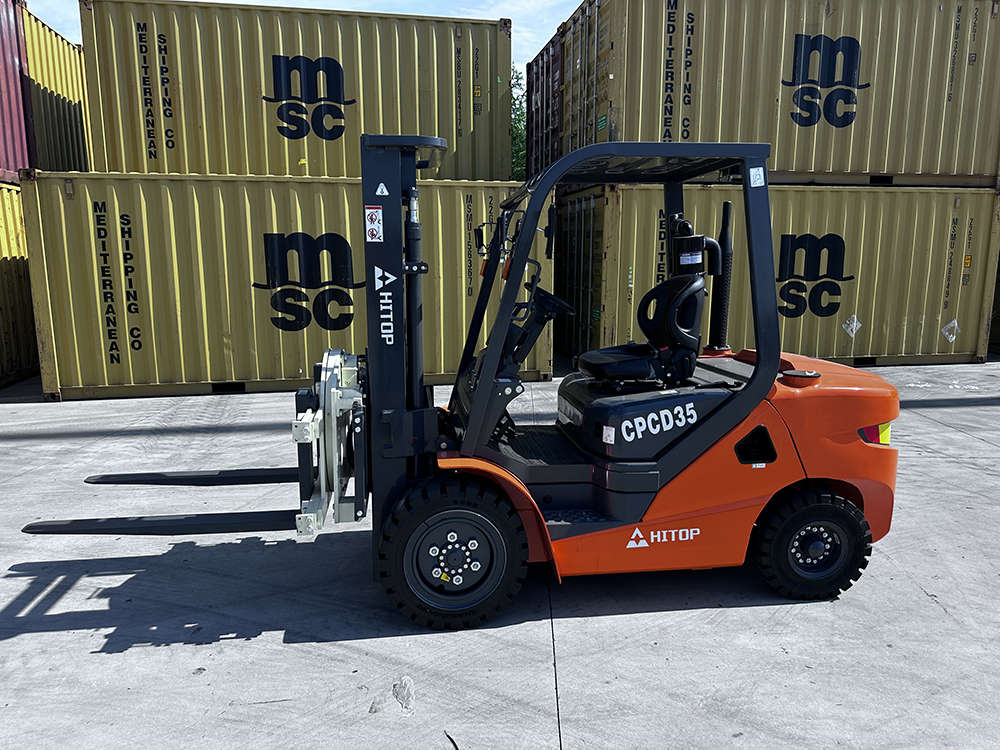 What to Check When Your New Forklift Arrives
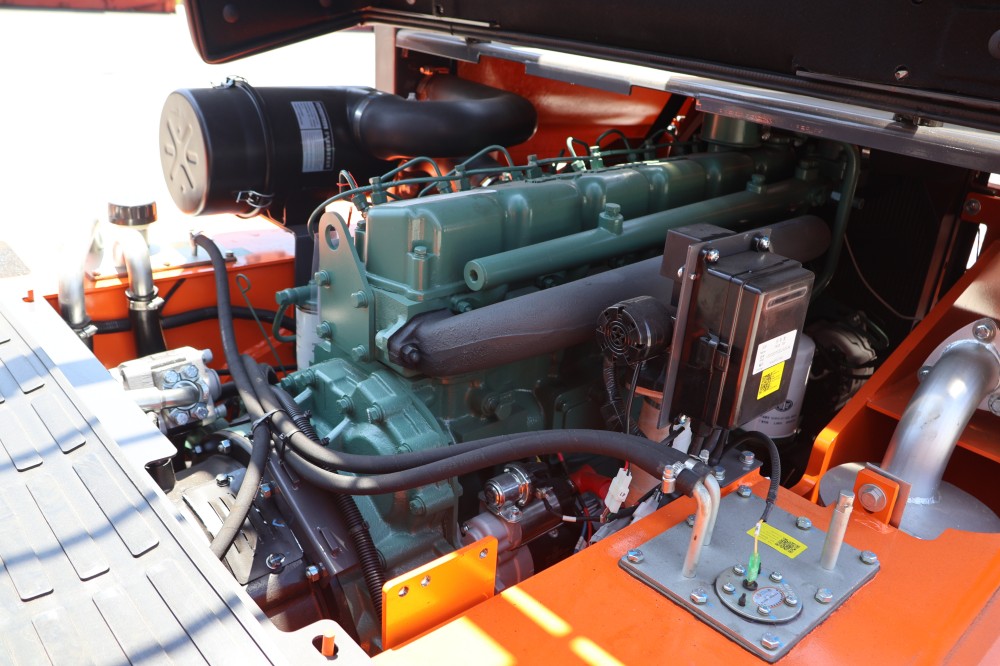 250-Hour Forklift Maintenance: What to Check After the Second Service Interval
 First 50-Hour Forklift Maintenance: What Should Be Checked After Initial Use


