Foreword Statistics show that most forklift accidents are not caused by equipment failure, but by habitual violations and poor operating practices. Habits that seem to save time in the short term often become deep-seated safety hazards.
To help enterprises ensure safe operation and minimize risks, we have compiled 21 high-frequency forklift driving taboos. These cover four core scenarios: driving, transportation, parking, and personnel behavior. We recommend this guide for internal training and routine safety audits.
The 21 Forklift Driving Taboos
I. Facility Driving Taboos (6 Items)
Safe movement is the foundation of forklift operations. The following practices are strictly prohibited:
- Speeding at Blind Spots: Do not speed through corners, aisle intersections, or blind spots, even if you are familiar with the site.
- Tailgating and Unsafe Overtaking: Avoid overtaking on main aisles or following other vehicles too closely. Always maintain a safe braking distance.
- Failure to Signal: Never pass through obstructed areas or corners without sounding your horn to alert pedestrians and other drivers.
- Aggressive Acceleration and Braking: Avoid frequent rapid acceleration or sudden braking; do not rely on momentum for sliding operations.
- Obstructing Emergency Zones: Never drive through or park in fire lanes, pedestrian walkways, or emergency exits.
- Neglecting Slippery Surfaces: Do not maintain normal speeds on surfaces contaminated with water, oil, or other slippery substances.
II. Loading and Transportation Taboos (6 Items)
Improper handling during transit can lead to cargo damage or vehicle rollovers:
- High Lift During Transit: Never travel long distances with forks raised high. This raises the center of gravity and significantly increases the risk of tipping.
- Off-Center Loading: Driving at high speeds with an unbalanced or one-sided load is strictly prohibited.
- Unsecured Oversized Loads: Do not transport ultra-high, ultra-wide, or ultra-long cargo without proper protective measures and fixation.
- Adjusting Height While Moving: Never raise or lower the forks while the vehicle is in motion, as it compromises stability.
- Pushing or Dragging with Forks: Do not use forks to push or drag pallets or goods; this "brute force" operation damages both the equipment and the cargo.
- Loose Stacking: Avoid transporting multi-layered stacks that are not properly bound or secured.
III. Start-Stop and Parking Taboos (5 Items)
Neglecting the details of starting and stopping is a common safety loophole:
- Skipping Pre-Shift Inspections: Never operate a forklift that shows signs of abnormality or mechanical failure.
- Incomplete Stops: Do not allow personnel to mount/dismount or adjust cargo until the vehicle has come to a complete standstill.
- Improper Temporary Parking: Never leave a forklift without engaging the handbrake or with the forks suspended in the air.
- Parking on Inclines Without Chocks: Parking on a slope without using wheel chocks is dangerous and can lead to runaway vehicle accidents.
- Extended Idling: Avoid long periods of idling, which wastes fuel/battery power and accelerates equipment aging.
IV. Personnel Behavior Taboos (4 Items)
Human behavior is the core factor in most accidents. These "red lines" must never be crossed:
- Unauthorized Passengers: Never use a forklift to carry passengers; it is designed for a single operator.
- Distracted Driving: Using mobile phones, chatting, or losing focus while driving is strictly prohibited.
- Exposing Body Parts: Do not lean your head, hands, or body out of the cabin or overhead guard during operation.
- Driving Under Impairment: Never operate a forklift when fatigued, unwell, or in a poor mental state.
8 Critical High-Risk Behaviors: A Deeper Analysis
Among the 21 items, these 8 carry the highest risk and are often the focus of safety inspections:
- Blind Spot Speeding: The #1 cause of pedestrian-vehicle collisions in warehouses.
- Traveling with Raised Forks: Causes the vehicle to lose balance on minor bumps and risks falling cargo.
- Overloading/Off-Center Loading: Destroys balance, leading to rollovers during turns or braking.
- Moving Fork Adjustment: Instantly shifts the center of gravity, causing sudden instability.
- Illegal Passenger Carrying: Lack of passenger protection leads to falls and serious injuries.
- Unsecured Parking on Slopes: Runaway forklifts can cause catastrophic damage to people and property.
- Aggressive Dragging of Goods: Increases wear on hydraulic systems and leads to costly cargo damage.
- Fatigued/Distracted Driving: Eliminates the reaction time needed to avoid sudden hazards.
Implementation and Management Tips for Fleet Managers
Knowledge is only the beginning. Use these 4 methods to standardize operations:
- Pre-Shift Safety Briefings: Randomly quiz drivers on 3 taboos every morning to keep safety top-of-mind.
- Weekly Self-Audits: Have drivers review their own habits against this list and document improvements.
- Site Inspections: Safety officers should focus on identifying and correcting the 8 high-risk behaviors in real-time.
- Video-Based Training: Use standardized operational videos to unify standards for both new and veteran drivers.
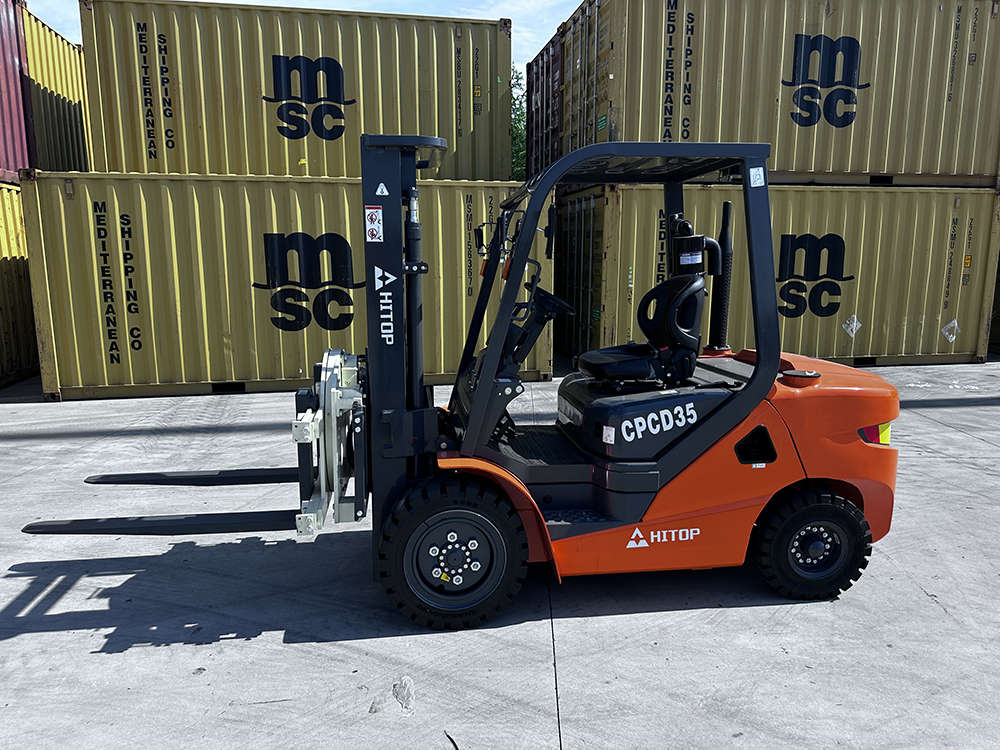
At HITOP Forklift, we believe safety is the best productivity. By eliminating these 21 taboos, you build a safer and more efficient workplace.

 What to Check When Your New Forklift Arrives
 250-Hour Forklift Maintenance: What to Check After the Second Service Interval
 First 50-Hour Forklift Maintenance: What Should Be Checked After Initial Use


