Welcome to HITOP FORKLIFT
EN

Language

Language
Save
icon Inquiry cart ( 0 )
News & Events

How to maintain the diesel forklift

Views : 973
Author : Hitop
Update time : 2020-08-26 14:04:48

Scope
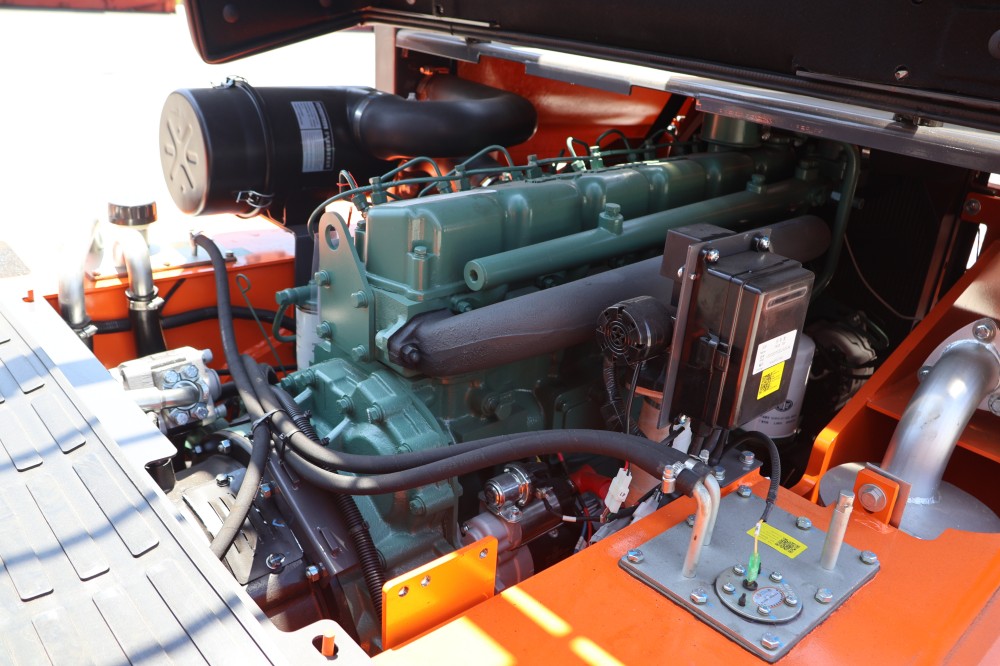
This regulation stipulates specific operations and precautions for diesel forklift maintenance steps and maintenance requirements. Regular maintenance and inspections are required to keep the forklift truck working normally.
 

250-hour inspection and maintenance of the vehicle
(1) Clean and lubricate the steering axle. Thoroughly clean the turning bridge with water or cold detergent.
(2) Lubricate the mast and tilt cylinder support seat. Grease is injected through the oil filling nozzle of the inclined oil cylinder at the mast bracket. Inject grease through the grease nozzle of the mast support seat at the frame until fresh grease leaks from the bearing.
(3) Check the condition and tightening of wires, wire terminals and connectors.
(4) Check the connections and tightening and wear conditions of the hydraulic system, and tighten or replace if necessary.
(5) Pour grease into the grease nipple on the guide wheel of the forklift and the grease nipple on the fork frame until the fresh grease seeps out.
(6) After cleaning the forklift, the piston rod must be lubricated.
 

Vehicle 500-hour inspection and maintenance
(1) Check the status and fastening of the mast and lifting chain. Thoroughly clean the mast guide groove and lifting chain. Check the condition and wear of the hoisting chain, pay special attention to the sprocket area and check the condition of the chain fixing pin. If it is damaged, replace it immediately.
(2) Adjust the length of the lifting chain. After working for a period of time, the lifting chain will be stretched. Therefore, the left and right chain lengths must be checked and adjusted.
(3) Spray the surface of the guide groove and the chain with chain spray to make it more lubricated.
(4) Drain the engine oil. The oil can only be changed when the engine is at operating temperature.
(5) Replace the engine oil filter. Apply a small amount of engine oil to the gasket of the new filter, screw in the filter by hand until the sealing layer is engaged, and then twist it half a turn.
(6) Add engine oil. After adding new engine oil and replacing the filter, the engine should be tested. During the test run, observe the oil pressure warning light and check the tightness of the oil drain plug and filter.
(7) Check the coolant. The cooling system should be filled with a mixture of water and antifreeze all year round. Prevent precipitation, condensation, oxidation and boiling point increase. The content of antifreeze and water are 40% and 60% respectively.
(8) Check the connection between the drive axle and the engine, the bracket, the balance weight, the roof guard, the steering axle and the fastening condition of the drive axle.
(9) Check and lubricate the pedal mechanism, the linkage mechanism of driving operation and the control mechanism of the engine. If necessary, add a little oil to the pedal journal and fork joints.
(10) Check the transmission belt of the generator and fan. Damaged or loose belts will affect cooling performance. The belt tension is 355N. There are two ways to check the belt: one is the gauge check, the other is the finger pressure check.
(11) Replace the fuel filter and clean the radiator and hydraulic oil cooler.
 

Vehicle inspection and maintenance for 1000 hours
(1) Replace the air filter element and check the negative pressure switch (at least every 12 months or after 5 cleanings). When installing the filter element, be careful not to damage the filter element and ensure that the installation position is correct.
(2) Check the condition and tightening of the engine support. The elastic support of the engine cannot be subjected to heavy pressure, and the maintenance times of the support vary with the working environment.
(3) Check the air-tightness of the intake and exhaust pipelines.
(4) Check the tightness of hydraulic system, drive axle, pump, valve and pipeline.
(5) Replace the pressure filter. When replacing, lower the door frame and loosen the filter seat on the left side of the gear box, and unscrew the filter by hand. Fill the new filter with hydraulic oil and oil the sealing ring. During trial operation, check the sealing condition of the filter contact surface.
(6) Replace the suction filter. During the replacement process, pull out the filter element slowly so that the oil can flow back into the tank. Test run, check the sealing condition of the filter cover.
(7) Replace the ventilation filter. Unscrew the vent filter of the hydraulic oil tank, pull out the oil mark from the filter, and install it on the new filter. If the working environment is poor, it is necessary to replace the filter early.
(8) Check the oil level of the wheel reducer. To check this item, lower the fork frame completely and check the oil level of the wheel reducer on both sides. The fuel volume on each side is about 2.0 liters.
(9) Check the parking brake. Drive the fully loaded forklift to a slope with a slope of 15%, step on the brake pedal, lock the parking brake handle, and stop the engine. The forklift should not be able to move at this time.
 

Vehicle 2000-hour inspection and maintenance
(1) Replace the V-belt of the generator and fan. Check with finger pressure: press down the belt with your thumb to check its tension. The belt sinks about 10mm between the pulleys. If the tension is not enough, tension the belt. After running the engine for about 15 to 20 minutes, re-tension the belt.
(2) Check the fuel nozzle. Special tools should be used for inspection and adjustment of fuel nozzles. Nozzle pressure standard: 300bar.
(3) Check and adjust the valve clearance. When the engine is cold and warm, the valve clearance can be checked. Valve clearance refers to the gap between the rocker arm and the valve. If the engine is running smoothly, if the engine is running smoothly, and can reach the maximum power, it indicates that the valve clearance is adjusted correctly. Valve clearance standard: intake valve 0.20mm and exhaust valve 0.45mm.
 

Vehicle 3000-hour inspection and maintenance
(1) Replace hydraulic oil. When replacing the hydraulic oil, the fork frame must be completely lowered and the hydraulic oil in the vehicle must be drained. The total oil volume is 39L.
(2) Check the connection between the drive axle and the engine. Remove the bottom plate and tighten all bolts to 64Nm. The drive axle is mounted on the middle shell by 8 M10 bolts. The middle shell has 9 M10 bolts installed on the engine.
(3) Lubricate the mast and tilt cylinder support seat. Grease is injected through the oil filling nozzle of the inclined oil cylinder at the mast bracket. Inject grease through the grease nozzle of the mast support seat at the frame until fresh grease leaks out of the bearing.
(4) Check the status and fastening of the mast and lifting chain. Thoroughly clean the mast guide groove and lifting chain. Check the condition and wear of the hoisting chain, pay special attention to the sprocket area and check the condition of the chain fixing pin. If it is damaged, replace it immediately.
(5) Replace the engine oil filter. Apply a small amount of engine oil to the gasket of the new filter, screw in the filter by hand until the sealing layer is engaged, and then twist it half a turn.
(6) Replace the air filter element and check the negative pressure switch (at least every 12 months or after 5 cleanings). When installing the filter element, be careful not to damage the filter element and ensure that the installation position is correct.
(7) Replace the suction filter. During the replacement process, pull out the filter element slowly so that the oil can flow back into the tank. Test run and check the sealing condition of the filter cover.
(8) Replace the ventilation filter. Unscrew the vent filter of the hydraulic oil tank, pull out the oil mark from the filter, and install it on the new filter. If the working environment is poor, it is necessary to replace the filter early.
(9) Check the parking brake. Drive the fully loaded forklift to a slope with a slope of 15%, step on the brake pedal, lock the parking brake handle, and stop the engine. The forklift should not be able to move at this time.
(10) Check the coolant. The cooling system should be filled with a mixture of water and antifreeze all year round. Prevent precipitation, condensation, oxidation and boiling point increase. The content of antifreeze and water are 40% and 60% respectively.
(11) Replace the fuel filter and clean the radiator and hydraulic oil cooler.


Related News
Read More >>
How Long Do Forklifts Last? How Long Do Forklifts Last?
Dec .25.2025
Discover the average forklift lifespan (hours & years), key factors that affect durability, and practical tips to extend your forklift's service life. Learn when to repair or replace.
Customized RAL Color Forklifts, Scissor Lifts & More Shipped to Paraguay Client Customized RAL Color Forklifts, Scissor Lifts & More Shipped to Paraguay Client
Sep .29.2025
HITOP FORKLIFT, a leading supplier of premium material handling and aerial work equipment, is proud to announce the successful shipment of a diverse range of industrial machinery to a valued client in Paraguay. This order underscores our commitment to supporting industrial growth and operational efficiency across South America.