As an important equipment in modern warehousing and logistics industry, forklifts have greatly improved the operation efficiency, but the hidden safety risks in their operation process cannot be ignored.
Among them, blind spots are one of the main causes of forklift accidents. Blind spots may not only cause damage to goods, but also cause personal injury or even major safety accidents.
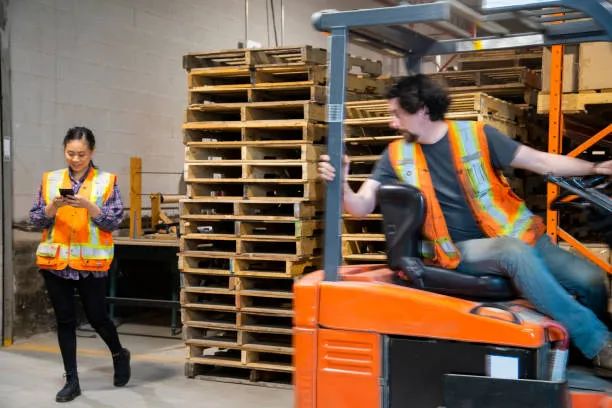
There are many reasons for the formation of blind spots in forklift vision, which are not only due to equipment design limitations, but also closely related to the working environment and operator behavior.
This article will analyze in detail the 10 common blind spots in forklift operation, explain their hazards with actual cases, and provide targeted countermeasures to help operators and managers improve their safety level in an all-round way.
Whether it is through the assistance of technical equipment, or improving the working environment and strengthening operating specifications, understanding and dealing with blind spots can minimize safety risks.
10 Different Types of Blind Spots in Forklifts
1. Blind spot in front of cargo
Cause: When the forklift is fully loaded with cargo, the height of the cargo exceeds the normal line of sight of the driver, resulting in a complete obstruction of the front line of sight.
Theoretical avoidance method: According to safety regulations, when the forklift is fully loaded with cargo, it should be driven in reverse to avoid obstruction of the line of sight. However, some forklift drivers ignore this regulation and drive forward directly in order to save trouble or improve efficiency, which greatly increases the risk of accidents.
Blind spot when not loaded: Even if the forklift is not loaded, the fork or the mast itself will form a certain blind spot, and small obstacles may be ignored at a low angle.
Typical scenario: When driving forward with full cargo, the driver fails to notice pedestrians or obstacles ahead, resulting in a collision. When the vehicle is not loaded, the driver focuses on the distance and ignores small obstacles on the ground, such as tool boxes or tripods.
Dangerous consequences: Serious injury to pedestrians ahead or damage to cargo and equipment.
2. Blind spot behind the cab
Cause: When a forklift is fully loaded with cargo, the rear view is blocked due to the vehicle design and the position of the driver's cabin. The driver usually relies on the rearview mirror to observe the rear, but changes in ambient light or reflections from cargo can easily interfere with the mirror effect, making it impossible to clearly judge the situation behind.
Dangerous characteristics:
When reversing, the driver's perception of obstacles, pedestrians or vehicles behind is limited, and collisions are very likely to occur.
In the case of poor lighting conditions or strong reflections, judgment is further difficult and operation accuracy is affected.
Typical scenarios:
Reversing collision: The driver fails to accurately judge the rear environment, resulting in contact with pedestrians, cargo or other equipment.
Operation area risk: In narrow or complex environments, insufficient rear visibility increases the probability of forklifts colliding with obstacles.
3. Blind spots on both sides of the fork
Cause: The placement of goods on the forks will block the view on both sides of the forks, especially when the width of the goods is large or irregular.
Dangerous characteristics: The sides of the forks are prone to hitting the shelf columns or scratching with nearby forklifts.
Typical scenario: When loading and unloading goods in narrow warehouse aisles, the blind spot outside the forks does not notice the nearby shelves or facilities.
4. High Blind Spot
Cause: When a forklift is used to carry goods, especially when a stacker is used for warehousing, it is often difficult for the operator to visually determine the exact position of the fork during the lifting process. Even if the driver sticks his head out of the vehicle, he can only rely on experience and feeling to roughly locate the fork, which is a very risky way of operation.
Dangerous characteristics: The stability of high-altitude goods is difficult to judge, and they may fall due to unstable stacking.
Typical scenario: When stacking goods on high shelves, the tilt of the goods is not noticed, causing the goods to fall and injure people or equipment below.
5. Low blind spot
Cause: The driver's perspective is usually higher than the ground, which makes it easy to overlook ground objects (such as tools, parts, or the feet of ground workers) in the blind spot.
Dangerous characteristics: The area under the forklift tires or forks is a high-risk area for accidents, especially in narrow or cluttered sites.
Typical scenarios: Running over a toolbox on the ground or accidentally running over a person's feet.
6. Blind spot when turning
Cause: When a forklift turns, especially when the curve is narrow, the vision on both the inside and outside of the curve may be limited.
Dangerous characteristics: Obstacles or pedestrians on the inside and outside of the curve may be ignored due to the obstruction of vision.
Typical scenario: When turning in the warehouse aisle, the forklift or pedestrian on the other side is not noticed, resulting in a collision accident.
7. Tire attachment blind spot
Cause: The area around the forklift tires, especially the outer tires, cannot be directly observed by the driver when turning.
Dangerous characteristics: It is easy to crush low objects or people's feet.
Typical scenario: During the turning process, the worker stands too close, causing the feet to be pinched or crushed by the tires.
8. Fast dynamic blind spot
Cause: When the forklift is driving at high speed, the driver's attention is focused on the dynamic environment in front, and it is easy to ignore the subtle changes in the surroundings.
Dangerous characteristics: The blind spot of vision is aggravated during rapid movement, and it is difficult to avoid obstacles in time.
Typical scenario: When speeding inside the warehouse, a collision occurs because the side forklift or cargo is not captured in time by the line of sight.
9. Light Change Blind Spot
Cause: When a forklift moves from a dark area to a bright area (or vice versa), it takes time for the driver to adapt visually, resulting in a short-term blind spot.
Dangerous characteristics: When operating a forklift in an environment with alternating light and dark, it is easy to ignore environmental changes.
Typical scenario: When driving from an indoor warehouse to an outdoor area with strong sunlight, the driver fails to adapt to the light in time and hits an obstacle.
10. Blind spot due to obstructions
Cause: Other goods, equipment or personnel block the view, making it impossible to observe the situation behind the blockage.
Dangerous characteristics: Dynamic changes in the blocked area are invisible, which is prone to accidents.
Typical scenario: There is a pedestrian hidden under the fork, and the forklift operator fails to notice it due to the blocked view, resulting in a collision accident.
Measures to reduce blind spots in vision
The safety hazards brought by the blind spots of forklifts cannot be ignored, but through technical means, operational specifications and management optimization, the impact of blind spots can be effectively reduced and the risk of accidents can be reduced. The following are 6 measures and specific suggestions for blind spots:
1. Use technical assistance
Install rear-view camera and monitoring system: Install a camera behind the cab to display the rear situation in real time and help the driver understand the dynamics of the rear blind spot.
Configure panoramic imaging system (360-degree field of view): Use multi-camera splicing technology to provide the driver with 360-degree real-time monitoring images to eliminate blind spots in all directions. Suitable for forklift operations in narrow spaces or complex sites.
Install uwb or laser sensors: Detect obstacles or pedestrians around the forklift and issue sound and light alarm prompts. If necessary, a deceleration device can also be installed. In case of dangerous situations, it will actively slow down and brake to stop to avoid collisions.
Install a forward limiter in case the forklift is still moving forward with a full load: the sensor detects whether there are obstacles or cargo in front. If detected, the system will restrict forward movement, forcing the forklift driver to adopt a safe reverse driving method.
2. Improve forklift design
Optimizing forklift design can fundamentally reduce the scope and impact of blind spots.
Fork-mounted camera: Install a camera above or at the end of the fork to transmit the fork's operating image to the driver's screen in real time.
Effect: Help the driver observe the details of the fork's operating area, especially when working at height, to avoid the fork's tilt, tilt or fall.
Recommendation: Choose a dustproof, waterproof and earthquake-resistant camera, and maintain the equipment regularly.
Optimized attachment design:
Improve the structure and function of attachments for specific cargo shapes, such as attachments with guides or equipped with horizontal correction functions to reduce the risk of blind operation.
Effect: Reduce the risk of accidents caused by improper attachments or inaccurate operation, especially when handling complex or irregular shapes.
Recommendation: Choose attachments that are suitable for a variety of cargo shapes and weights, and are equipped with easy-to-adjust control systems.
Improved lighting system:
Equip the forklift with high-brightness LED lights and lighting auxiliary equipment to ensure clear vision in low-light environments.
Recommendation: The lights should be evenly distributed to avoid aggravating blind spots due to strong light reflections.
3. Improve the working environment
Optimizing the design and management of work sites is an important part of reducing blind spot accidents.
Reasonable layout of aisles and shelves:
Ensure wide aisles, reduce corners, and keep shelves neatly arranged.
Recommendation: Use floor markings or warning signs to mark dangerous areas for easy identification by operators.
Add a reflector or convex mirror:
Install convex mirrors at places with high incidence of blind spots, such as bends and narrow areas, to make it easier for drivers to observe the surrounding environment.
Recommendation: Clean and inspect the mirror regularly to ensure it is free of stains and cracks.
Keep the venue clean:
Clear the excess items in the work area to avoid the expansion of low blind spots due to the accumulation of debris.
Suggestion: Establish a daily cleaning system to ensure that the work environment is orderly.
4. Strengthening operational standards
Standard operation and correct behavior of the operator are the key to avoiding blind spot accidents.
Comply with the reverse driving regulations:
When the cargo blocks the view ahead, you must drive in reverse to ensure safety.
Suggestion: Strengthen enforcement through daily training and inspections, and deal with violations seriously.
When turning or reversing, honk the horn to warn, and observe the environment behind and on both sides at the same time, and pass only after confirming that it is safe.
Recommendation: Make sure the warning horn and lighting equipment are in good working condition before operation.
Blind operation is prohibited:
Before entering a blind spot or complex environment, you should get off the vehicle and observe first, and then operate after confirming that the environment is safe.
Recommendation: Operators should drive slowly and carefully, especially around bends, high shelves or obstructions.
5. Raise staff awareness
Conduct blind spot demonstration training: Use actual operation or simulation equipment to let operators experience the danger and impact range of forklift blind spots.
Recommendation: Update training content regularly to incorporate new technologies and cases.
Establish a safety responsibility system: clarify the safety responsibilities of operators, and regularly assess and reward safe behaviors.
Suggestion: Improve the participation of all employees through performance evaluation and incentive mechanisms.
6. Adopting intelligent management system
By introducing intelligent equipment and systems, a comprehensive upgrade of blind spot management can be achieved.
Internet of Vehicles technology: Real-time monitoring of equipment operating status and surrounding environment through networked forklifts, timely identification of potential blind spot hazards.
Recommendation: Configure a unified management platform for large forklift fleets to achieve information sharing and early warning linkage.
Dynamic blind spot warning system: The system analyzes the dynamic changes in the forklift's surrounding environment and issues real-time alarms based on sensor data.
Recommendation: Prioritize promotion and use in complex work sites and high-risk areas.

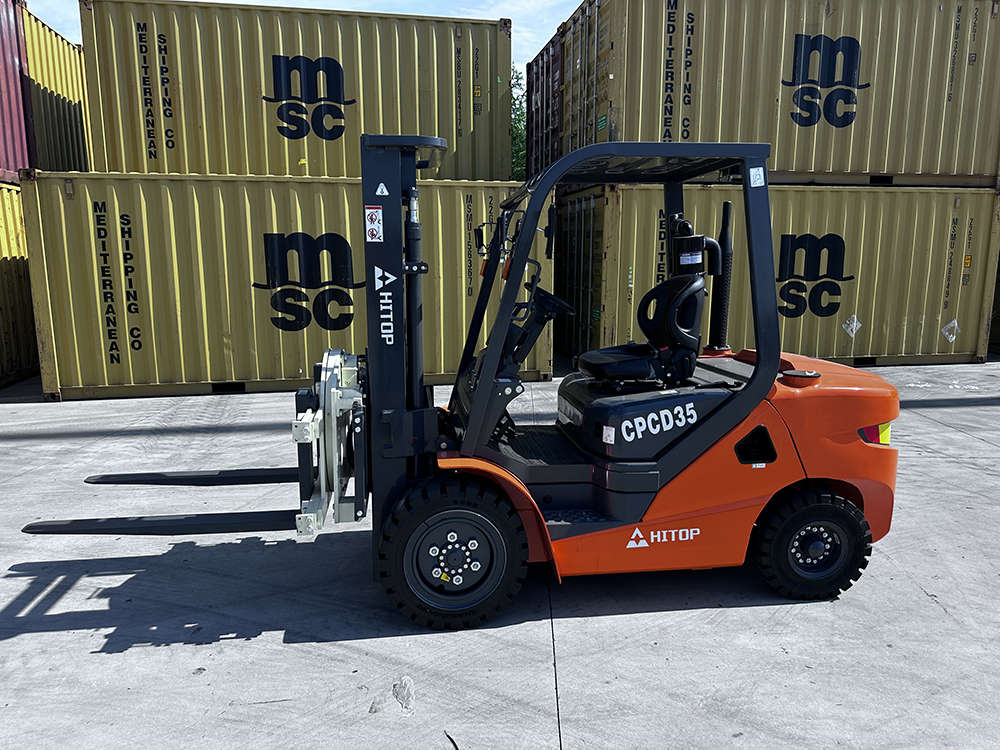 What to Check When Your New Forklift Arrives
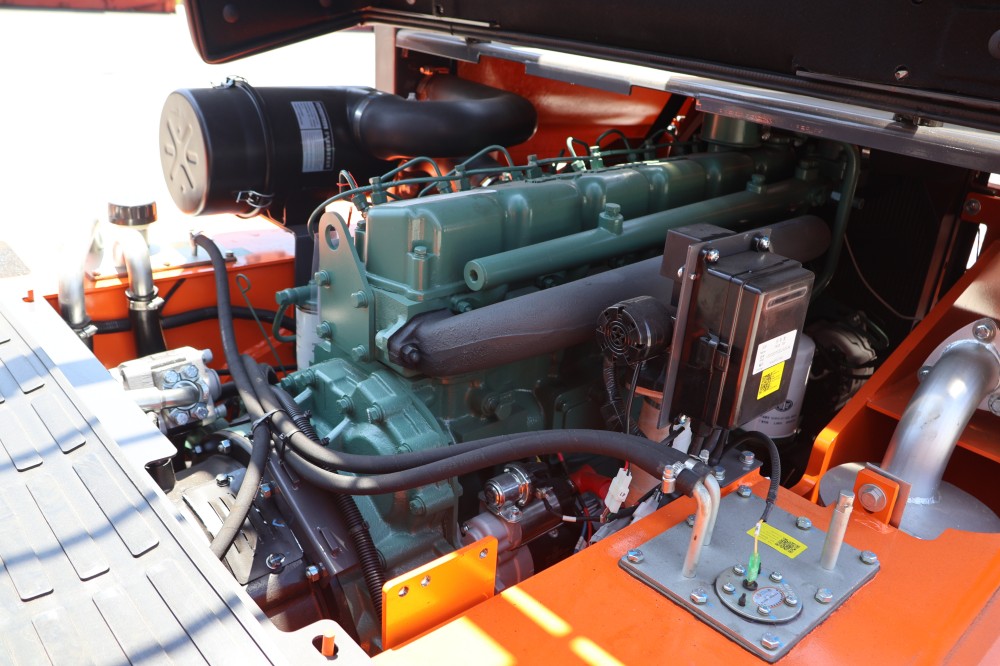 250-Hour Forklift Maintenance: What to Check After the Second Service Interval
 First 50-Hour Forklift Maintenance: What Should Be Checked After Initial Use


