Welcome to HITOP FORKLIFT
EN

Language

Language
Save
icon Inquiry cart ( 0 )
News & Events

The Basics of Forklift Tire Maintenance

Views : 2528
Update time : 2024-03-01 11:42:00
The tire is the only connection point between the forklift and the road. It not only bears the entire weight of the forklift and the weight of the cargo, but also responds to driving actions such as steering, acceleration and braking, and absorbs the impact of the road on the vehicle. Especially in winter when the ground is slippery, tires are crucial to driving safety and cannot be ignored! So how to maintain forklift tires?

Do driving habits affect tire life?
Yes, the driver's driving habits are closely related to the life of the tires! Please try to avoid the following operating habits:
Overloading, speeding (>25KM/H), long distance (>2KM), and long-term use of tires will greatly shorten the service life of the tires;
Bad habits such as quick starts, emergency braking, quick turns, and turning the steering wheel of the forklift on the spot will aggravate tire wear or cause eccentric wear, slip rings, tire hub separation and sliding, etc.;

What maintenance do tires require?
The tires cannot be missed in the daily inspection of the forklift. The inspection in just a few minutes is very important.
The status of the tires needs to be checked every day when the shift is handed over. If there are foreign objects stuck in the tire tread, they should be removed in time. If the tread pattern is found to be flat or cracked, or pieces have fallen off, new tires should be replaced in time;
Maintenance personnel should regularly check the tightness of tire tightening bolts;
The tire pressure of pneumatic tires should be checked regularly.

How are tires stored?
Good storage can extend the service life of spare tires as much as possible:
Tires must be stored indoors to keep them fresh, dry, and naturally ventilated. If stored outdoors, they must be covered with an opaque tarpaulin;
Tires should be stored away from direct sunlight, away from heat sources, grease, acids and alkalis, chemical solvents, etc., and at the same time, the "first in, first out" principle must be ensured.


If the tires have the following problems, they need to be replaced immediately
The wear-resistant layer of the front traction wheel is exhausted, and the forklift's braking force is seriously insufficient;
The wear-resistant layer of the rear steering wheel is exhausted, and the steering accuracy of the forklift is lost;
Uneven tire tread wear caused by abnormal forklift braking or damaged wheel bearings;
The vehicle is damaged by road obstacles or stuck on sharp objects, causing the tire tread and tire shoulder wear layer to tear off, causing the forklift to drive violently bumpy;
Damage to the tire mounting layer causes separation and sliding between the tire and the wheel hub.
Related News
Read More >>
What to Check When Your New Forklift Arrives What to Check When Your New Forklift Arrives
Sep .18.2026
A new forklift should be inspected before it enters daily service. A structured handover check gives the receiving team a chance to confirm that the truck arrived in the expected condition, that its basic functions work properly, and that the required documents are available.
250-Hour Forklift Maintenance: What to Check After the Second Service Interval 250-Hour Forklift Maintenance: What to Check After the Second Service Interval
Aug .24.2026
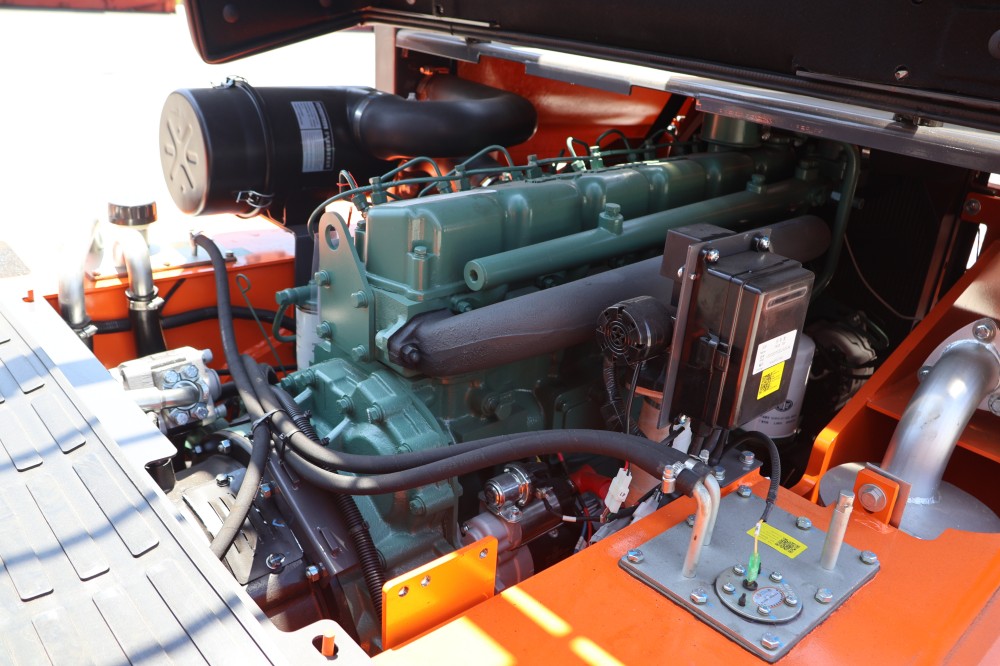
A proper 250-hour service is not just an oil change. It is a structured inspection of the forklift's operating condition, lubrication points, mast and chain system, transmission components, brake system, tire condition, and key fasteners. For electric forklifts, it is also the right time to inspect and clean the battery, electrolyte, connectors, and electrical controls.
First 50-Hour Forklift Maintenance: What Should Be Checked After Initial Use First 50-Hour Forklift Maintenance: What Should Be Checked After Initial Use
Aug .20.2026
Learn why the first 50-hour forklift maintenance is important and what should be checked, adjusted, lubricated, or replaced after the initial running-in period.